When Wright County packed up and moved 300-plus employees out of downtown Buffalo to the new government center on Braddock Avenue, the assumption around town was straightforward. Lose that many daily workers, lose the lunch crowds, the coffee runs, the after-work stops at the bar. Downtown would feel it.
It didn't. Community Development Director David Kelly has said as much directly: few, if any, business closures resulted from the move, and the downtown business environment has stayed stable through it. That's the detail worth sitting with before you look at what's happening to the old building the county left behind, because it changes what the redevelopment plan actually means.
The Building Everyone Assumed Would Sink Downtown
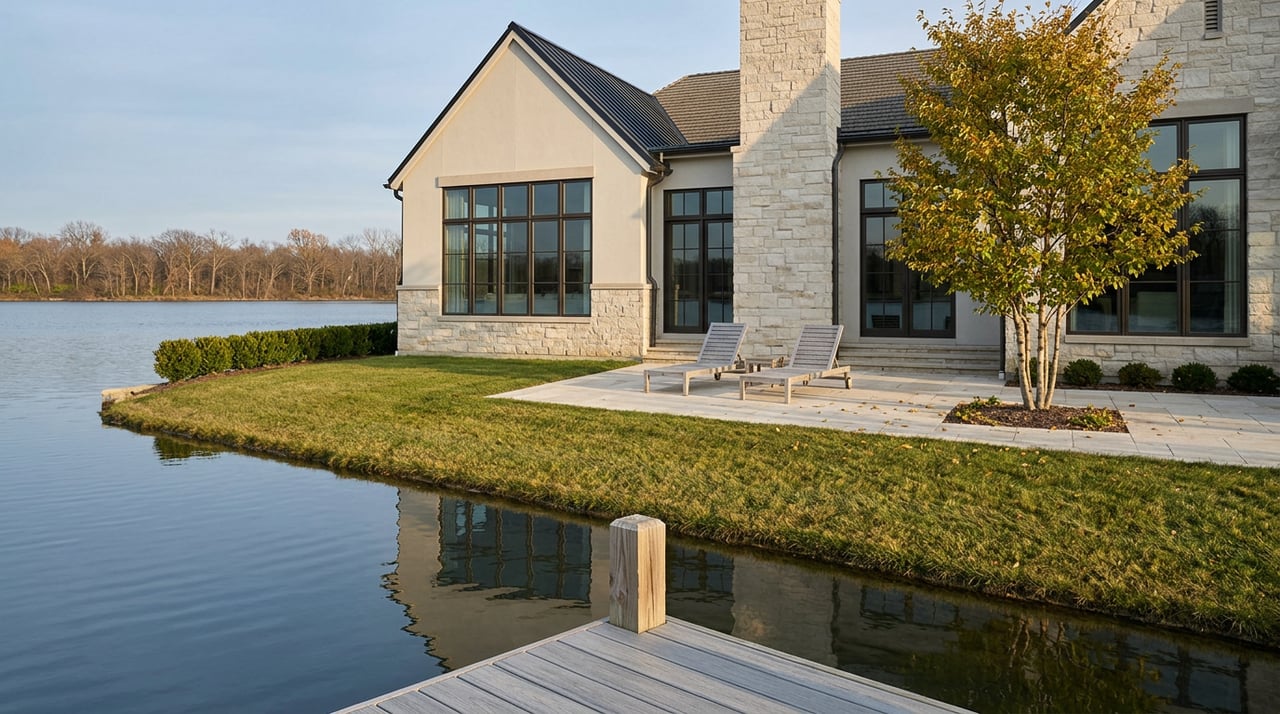
The old Wright County Government Center sits empty on 6.37 acres between 2nd Street and Lake Boulevard, a 158,000-square-foot building with nothing left to do since the county's departments cleared out. According to reporting from MPR News, a developer now plans to tear it down entirely and replace it with two five-story apartment buildings holding roughly 200 units, plus 16 patio homes and commercial space, all on the shore of Buffalo Lake.
Business View Magazine quoted Kelly calling it a once-in-a-lifetime opportunity for the city, and the reasoning is specific: Buffalo doesn't typically get a shot at residential development right on the lake, right off downtown. Early concepts for the site also include a marina, with around 50 slips split between public and private use.
"We don't typically have a potential residential development right on the lake, right off the downtown."
That's a different kind of downtown anchor than a government building ever was. A government center brings people in on a schedule, nine to five, badge in and badge out. Apartments and a marina bring people in on evenings and weekends, on the exact hours when the restaurants and shops downtown actually need the traffic.
What This Tells You About Downtown's Real Foot Traffic
Here's the part that reframes the whole story. If losing 300 government workers didn't hurt downtown business, the theory that government foot traffic was propping up Main Street doesn't hold up. Something else was doing that work. The most obvious candidate is the lake itself, and the fact that Buffalo's park system on Buffalo Lake and Lake Pulaski already pulls people downtown for reasons that have nothing to do with a county office.
That's consistent with what the city has been building toward for years. Kelly has talked about wanting residents to use the lake more, pointing to growing turnout at events like the Kites on Ice Festival and a newer hockey tournament that activate the waterfront outside of typical boating season. The redevelopment of the old government building isn't a rescue plan for a downtown that's struggling. It's a bet that the lake, not the courthouse, was always the draw, and that putting people there year-round will do more for downtown than a government building ever could.
The Construction You're Already Detouring Around
None of this is happening in isolation. At the same time the government center plan has been taking shape, the city has been in the middle of the Northeast Area Reconstruction project, tearing up 1st Avenue NE, 2nd Street NE, 3rd Street NE, and 1st Street NE, the street most people still call Wide Street.
The reason is unglamorous but real: the water and sewer lines under those streets are up to 90 years old. Full construction with road closures began April 20, 2026, and the work goes well beyond patching pavement. Here's what's actually going into the ground and onto the curb:
- New water main and sanitary sewer lines to replace aging infrastructure
- Rebuilt storm sewer and street pavement
- Reconfigured downtown parking lots and new sidewalks
- Buffalo Fiber, the city's own fiber-optic internet service, laid alongside the utility work
- Decorative street lighting and additional trees along the corridor
Mayor Steve Downer has framed the fiber expansion specifically as a way to ease pressure on property taxes over time, by improving how efficiently the city runs its own utilities. It's not a cosmetic upgrade. It's the same 90-year-old-pipe problem the marina redevelopment is trying to build past, just handled block by block instead of parcel by parcel.
You've likely already felt the most visible consequence of this project even if you didn't connect it to the government center news. This year's Buffalo Days parade needed a new route, rerouted specifically because of construction in the 1st Street NE area, according to the city's own announcement. That's not a hypothetical future inconvenience. It already happened, and it's a preview of how downtown will keep adjusting as both projects run through the rest of the year.
Where the Trail Already Meets the Plan
The piece of this that's easy to miss if you're only thinking about buildings is that the infrastructure for connecting a new lakefront development to the rest of downtown already exists. A walking and bike path runs nearly two miles along the shore of Buffalo Lake, starting at the library, passing the Parkshore Pavilion in Sturges Park, and continuing into the park itself. That pavilion already rents paddle boats, kayaks, canoes, stand-up paddleboards, pontoons, and fishing boats, the same kind of water access a future marina at the old government center site would offer just a few blocks away.
Put the two together and the geography does a lot of the explaining. A resident who parks near the library, walks the lake path past the Pavilion, and ends up at Sturges Park is already tracing the route a future resident of the government center site would use to reach downtown on foot. The redevelopment isn't inventing a new pattern of lake use. It's building housing directly onto a pattern that's already there every summer weekend.
The Rest of the Year, Mapped
For anyone trying to keep track of what's actually changing downtown between now and the end of 2026, the practical list looks like this:
- Northeast Area Reconstruction work continues through the fall, with parking, sidewalks, and traffic patterns shifting block by block as sections finish
- Buffalo Fiber installation continues alongside the street work, part of the same trenches being dug for water and sewer replacement
- The Wright County Historical Society's Festival of Trees opens the first Wednesday in December and runs through the first Friday in January, a fixture that isn't moving regardless of what's happening a few blocks away
- Downtown's Halloween trick-or-treat event, where kids visit participating businesses in costume, continues as usual through the construction zone
None of this erases the disruption of living through two major projects at once. But it does explain why the city isn't treating the empty building on the lake as an emergency to solve. It's treating it as the next step in a plan that started when the county moved out and downtown didn't fall apart.
If you're the kind of person who tracks what's happening in your own downtown, or you're weighing what it means for property near the lake, that's a conversation worth having with someone who's been watching this unfold block by block. Brisky Homes works this stretch of the northwest metro every day, and we're always glad to talk through what a changing downtown means for the neighborhoods around it. Get a Free Home Valuation whenever you're ready to see where your Buffalo property fits into the picture.